
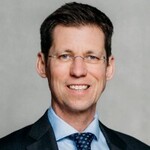
Prof. Dr. Mark Lawrence is scientific director at RIFS, the Research Institute for Sustainability at the GFZ Helmholtz Centre for Geosciences (formerly IASS). He addresses the Anthropocene in an integrative manner, bringing together a wide range of academic expertise in his team and involving societal actors in a transdisciplinary research approach.
His main transformative research topics include air pollution, climate change, climate geoengineering, environment-related governance of vulnerable regions like the Himalayas, the Arctic and the ocean, and the sustainability-oriented interfaces between the sciences and other key knowledge-holder communities such as the arts, religions and indigenous peoples.
He also actively supports whole person development as a component of sustainability, including exploring the common ground between personal transformations and systemic transformations, as well as the mindsets needed to bring these into harmony.
Short-lived climate-forcing pollutants (SLCPs) significantly contribute to both climate change and air pollution. For example, methane, for which half of the global emissions are anthropogenic, is currently responsible for nearly half as much global warming as CO₂. Methane is also the fuel for producing about one-third of the current global burden of tropospheric ozone, an important pollutant and greenhouse gas. Reducing warming SLCPs would have a rapid positive effect on the climate because they have a much shorter lifespan in the atmosphere than CO₂. Additionally, sulfur dioxide (SO₂), which forms cooling sulfate aerosol particles, is emitted alongside CO₂ when fossil fuels are burned. Therefore, when CO₂ emissions are decreased, the cooling effect of aerosol particles will also decrease, but on a much shorter timescale than CO₂ concentrations. This provides additional incentive to reduce warming SLCPs, such as methane and ozone.
Many technologies that can significantly reduce SLCP emissions already exist. Implementing these technologies would benefit climate stability and air quality. However, there are substantial challenges as well, including the fact that some SLCPs have numerous sources, so that controlling their concentrations would require simultaneous efforts on several fronts.
This talk will take a closer look at these technical challenges and provide insights into SLCPs, their impacts, and their mitigation. Going beyond these more technical aspects, it will also take on a more philosophical note, considering how and why an understanding of the Anthropocene relates to our attitudes and actions on SLCPs.






NCGG10 is organized by:
p/a UCo
2e Daalsedijk 6a
NL-3551 EJ UTRECHT
The Netherlands
Stichting MilCon (Foundation for Environmental Congresses, a separate legal entity that is linked to VVM) is responsible for the logistic and financial management of NCGG10. The contents of the symposium is the responsibility of VVM and its co-organisers. Logistic services for NCGG10 will be provided by the VVM.