
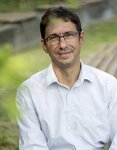
Prof. Dr. Sönke Zaehle is director at the Max Planck Institute for Biogeochemistry (MPI-BGC) in Jena Germany. He received his academic training as geo-ecologist at the universities of Braunschweig and Norwich (TU Braunschweig, Germany, University of East Anglia, UK) and holds a PhD from the Universität Potsdam, Germany (2005). After some time as a Marie-Curie Fellow at the Laboratorie des Sciences du Climat et de l’Environnement (LSCE, Gif-sur-Yvette, France) and group leader for terrestrial biosphere modelling at MPI-BGC, he was appointed as a Director in 2020. In his research, he integrates atmospheric and ecosystem observations and global modelling to better understand and predict past and future feedbacks between the biosphere and the climate system. Amongst others, he is member of the steering group of the Amazon Tall Tower Observatory near Manaus, Brazil, and contributes to the German national Earth system modelling strategy. From 2015 to 2022 he has been contributing to the IPCC, most recently as Lead Author of the Sixth Assessment Report.
Anthropogenic activities have substantially enhanced the generation of reactive nitrogen (Nr) in the Earth system since pre-industrial times, contributing to widespread eutrophication and air pollution. Nr influences global climate through a multitude of effects on atmospheric and land processes at different temporal and spatial scales, but the combined net effect on climate is still uncertain. In 2024 (Gong et al. 2024, Nature), we have shown that anthropogenic Nr causes a net negative direct radiative forcing of −0.34 [−0.20, −0.50] W m−2 in the year 2019 relative to the year 1850. This net cooling effect is the result of increased aerosol loading, reduced methane lifetime and increased terrestrial carbon sequestration associated with increases in anthropogenic Nr, which are not offset by the warming effects of enhanced atmospheric nitrous oxide and ozone.
In this presentation I will review the current state of knowledge including a wider array of studies and outline future research needs to understand the impact of reactive nitrogen of future climate trajectories. Irrespective of the remaining uncertainties, our results indicate that future reductions in anthropogenic Nr to achieve environmental protection goals need to be accompanied by enhanced efforts to reduce anthropogenic greenhouse gas emissions to achieve climate change mitigation in line with the Paris Agreement.









NCGG10 is organized by:
p/a UCo
2e Daalsedijk 6a
NL-3551 EJ UTRECHT
The Netherlands
Stichting MilCon (Foundation for Environmental Congresses, a separate legal entity that is linked to VVM) is responsible for the logistic and financial management of NCGG10. The contents of the symposium is the responsibility of VVM and its co-organisers. Logistic services for NCGG10 will be provided by the VVM.