
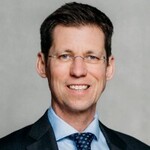
Mark Lawrence
GFZ Helmholtz Centre for Geosciences (formerly IASS), DE
Prof. Dr. Mark Lawrence is scientific director at RIFS, the Research Institute for Sustainability at the GFZ Helmholtz Centre for Geosciences (formerly IASS). He addresses the Anthropocene in an integrative manner, bringing together a wide range of academic expertise in his team and involving societal actors in a transdisciplinary research approach.
His main transformative research topics include air pollution, climate change, climate geoengineering, environment-related governance of vulnerable regions like the Himalayas, the Arctic and the ocean, and the sustainability-oriented interfaces between the sciences and other key knowledge-holder communities such as the arts, religions and indigenous peoples.
He also actively supports whole person development as a component of sustainability, including exploring the common ground between personal transformations and systemic transformations, as well as the mindsets needed to bring these into harmony.
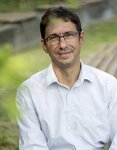
Sönke Zaehle
Max Planck Institute
for Biogeochemistry, DE
Prof. dr. Sönke Zaehle is director at the Max Planck Institute for Biogeochemistry (MPI-BGC) in Jena Germany. He received his academic training as geo-ecologist at the universities of Braunschweig and Norwich (TU Braunschweig, Germany, University of East Anglia, UK) and holds a PhD from the Universität Potsdam, Germany (2005). After some time as a Marie-Curie Fellow at the Laboratorie des Sciences du Climat et de l’Environnement (LSCE, Gif-sur-Yvette, France) and group leader for terrestrial biosphere modelling at MPI-BGC, he was appointed as a Director in 2020. In his research, he integrates atmospheric and ecosystem observations and global modelling to better understand and predict past and future feedbacks between the biosphere and the climate system. Amongst others, he is member of the steering group of the Amazon Tall Tower Observatory near Manaus, Brazil, and contributes to the German national Earth system modelling strategy. From 2015 to 2022 he has been contributing to the IPCC, most recently as Lead Author of the Sixth Assessment Report.
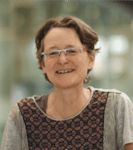
Ilse Aben
Space Research Organization
Netherlands, NL
Prof. dr. Ilse Aben is a senior scientist in the Earth group at SRON Netherlands Institute for Space Research. Her group at SRON focuses primarily on the interpretation of satellite remote sensing data of greenhouse gases (methane and CO2) and related species. Aben is the Dutch Co-Principal Investigator and co-initiator of the TROPOMI instrument on the Sentinel-5 Precursor mission. She leads the SRON TROPOMI team responsible for safeguarding the scientific performance of the TROPOMI SWIR channel measuring CO and methane. Her team runs a number of projects focusing on detection and emission quantification of a.o. methane super emitters. Aben is endowed professor at the Earth Sciences department of the Vrije Universiteit in Amsterdam, a member of the CCAC Science Advisory Panel, and member of various Mission Advisory Groups.

Arjan Hensen
TNO – Netherlands Organisation for
Applied Scientific Research, NL
Prof. dr. Arjan Hensen has a position at TNO in the Netherlands and usually hides in the dunes near Petten. One day a week he heads south to VU (Free University Amsterdam) attempting to make students enthusiastic for NCGG-research. His team is running the Cabauw ICOS - GHG measurement station and Arjan helped setting up measurements there three decades ago. Apart from national scale tall tower observations, his team does emission measurements. The preference lies with diffuse sources that are not easy to tackle. Methane and/or nitrous oxide from landfills, manured fields, animal housing, abandoned gas wells or industrial installations. In natural ecosystems they study CO2 and CH4 exchange as well as NH3 and NOx deposition. H2 emission measurements are a new activity. In relation to this Arjan is a lead author for the H2 annex to the upcoming IPCC report on short lived climate forcers.







NCGG10 is organized by:
p/a UCo
2e Daalsedijk 6a
NL-3551 EJ UTRECHT
The Netherlands
Stichting MilCon (Foundation for Environmental Congresses, a separate legal entity that is linked to VVM) is responsible for the logistic and financial management of NCGG10. The contents of the symposium is the responsibility of VVM and its co-organisers. Logistic services for NCGG10 will be provided by the VVM.